

Last updated: August 2, 2026
Quick Answer: The best way to learn Korean language step by step is to start with the Hangeul alphabet in week one, then build pronunciation, basic grammar, and core vocabulary in a structured sequence. Most beginners reach a conversational level within 6 to 12 months using daily 30-40 minute study sessions. A structured course or app-based program keeps you on track faster than random self-study.
Key Takeaways
- Learn Hangeul first – it takes most beginners just 1 to 2 weeks to read it fluently
- Aim for 30-40 minutes of daily study split across vocabulary, grammar, listening, and speaking
- Target 10-20 new words per day and reach 1,000 words as your first milestone
- Platforms like Coursera offer structured Korean language courses with graded quizzes and a certificate
- Apps, textbooks, and online lessons each have strengths – combining them works best
- Korean grammar follows Subject-Object-Verb order, which is different from English
- You do NOT need a teacher to make real progress – self-study works well with the right resources
- Speaking practice is possible even without Korean friends, using language exchange apps
What’s the Best Way to Start Learning Korean as a Complete Beginner
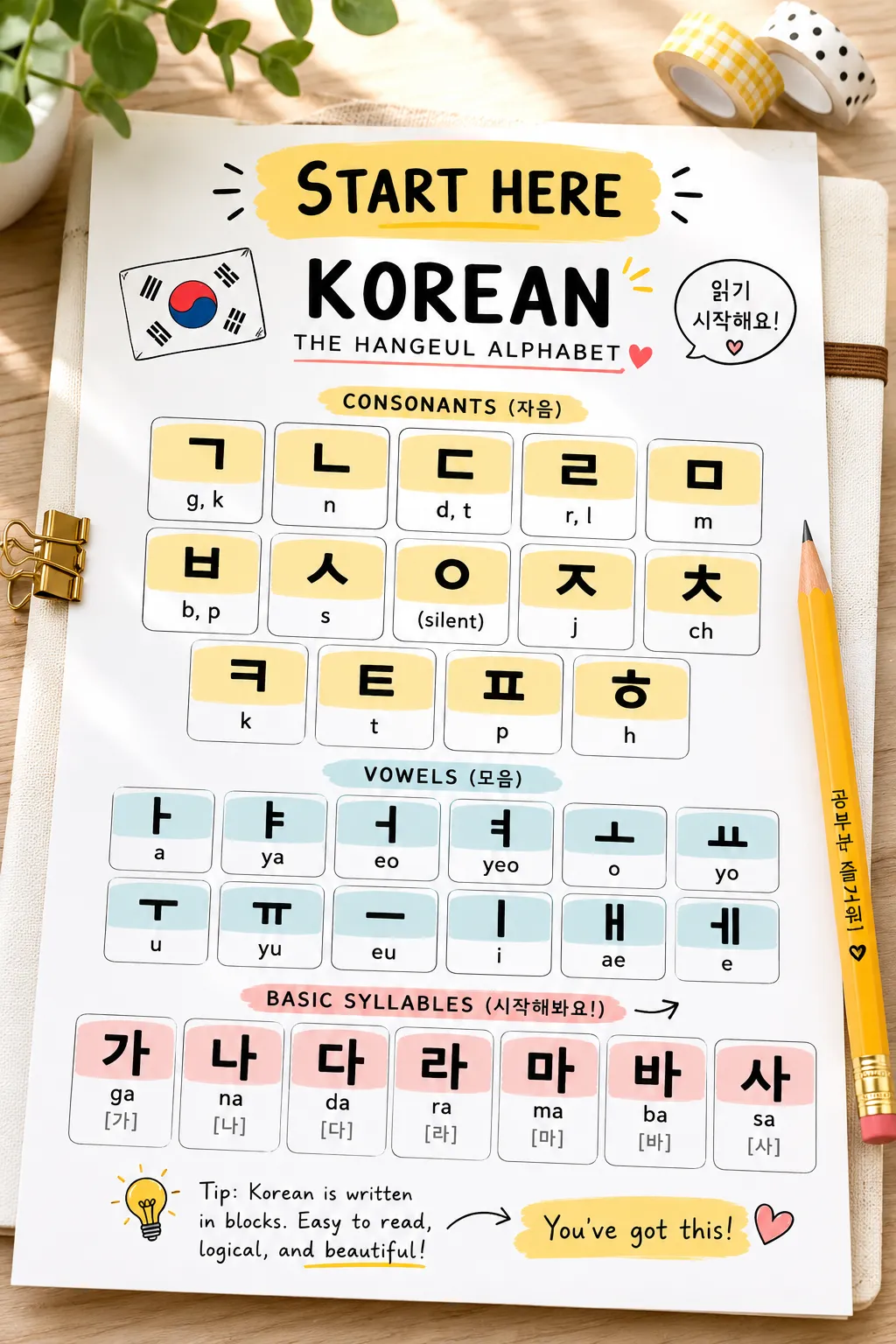
The single best first step is to learn the Korean alphabet, Hangeul, before anything else. Most learners who skip straight to phrases end up guessing pronunciation and building bad habits. Hangeul is a phonetic alphabet, which means each character maps directly to a sound – and most people can read it within a week or two [1].
Here is a simple phase-based roadmap to follow:
- Week 1-2: Learn all 14 basic consonants and 10 basic vowels in Hangeul
- Week 3-4: Practice reading simple syllable blocks and basic greetings
- Month 2: Start Korean grammar unit basics – sentence structure, particles, and verb endings
- Month 3-4: Build core vocabulary to 500 words and practice self-introductions
- Month 5-6: Move into daily life topics – family, time and date, food, shopping
- Month 7-12: Consume native content, take graded lessons, and aim for full conversations
This step Korean approach is backed by most structured Korean language programs [2]. The key is consistency over intensity.
“The learners who reach conversational Korean fastest are the ones who study a little every single day – not the ones who cram on weekends.”
Should I Learn Hangeul First or Start With Common Phrases
Learn Hangeul first – always. Skipping the Korean alphabet and relying on romanized pronunciation (writing Korean sounds in English letters) is one of the most common beginner mistakes. Romanization is inconsistent and will slow you down later [4].
The good news is that Hangeul is one of the most logical writing systems in the world. King Sejong designed it in the 15th century specifically to be easy to learn. Most beginners are able to read basic Korean text within 5 to 10 days of focused practice [1].
What to study in your first week:
- The 14 basic consonants: ㄱ ㄴ ㄷ ㄹ ㅁ ㅂ ㅅ ㅇ ㅈ ㅊ ㅋ ㅌ ㅍ ㅎ
- The 10 basic vowels: ㅏ ㅑ ㅓ ㅕ ㅗ ㅛ ㅜ ㅠ ㅡ ㅣ
- How syllable blocks combine consonants and vowels into single characters
Free resources like Talk To Me In Korean and YouTube videos make this first step Korean unit very accessible [3].
How Long Does It Take to Become Fluent in Korean
For English speakers, Korean is classified by the Foreign Service Institute as a Category IV language – the hardest category – requiring roughly 2,200 class hours to reach professional fluency. But conversational ability is reachable much sooner [10].
Here is a realistic timeline for most learners:
| Level | Estimated Time | What You Can Do |
|---|---|---|
| Basic reading | 1-2 weeks | Read Hangeul text aloud |
| Survival phrases | 1-2 months | Greetings, numbers, simple questions |
| Conversational | 6-12 months | Daily life topics, introductions |
| Intermediate | 1-2 years | TV shows, news, longer discussions |
| Advanced/Fluent | 3-5 years | Near-native comprehension |
Daily study of 30-40 minutes is the “minimum effective dose” most experts recommend. Learners who study 1 hour per day consistently reach conversational Korean in about 6 months [7].
What to Focus on First – Pronunciation, Grammar, or Vocabulary
Start with pronunciation through Hangeul, then move to basic grammar, then vocabulary. Trying to memorize vocabulary before you understand Korean grammar unit structure leads to confusion because Korean sentences are built differently from English ones [2].
The recommended learning order:
- Pronunciation – Learn Hangeul sounds and practice reading aloud
- Basic grammar – Subject-Object-Verb sentence order, topic markers (은/는), object markers (을/를)
- Core vocabulary – Aim for 10-20 new words per day
- Listening – Watch Korean videos with subtitles, then without
- Speaking – Practice greetings, then self-introductions, then full conversations
Korean grammar is actually more consistent than English grammar in many ways. Once you understand the patterns, building sentences becomes predictable [8].
Korean Learning Apps vs Textbooks – Which Is Better
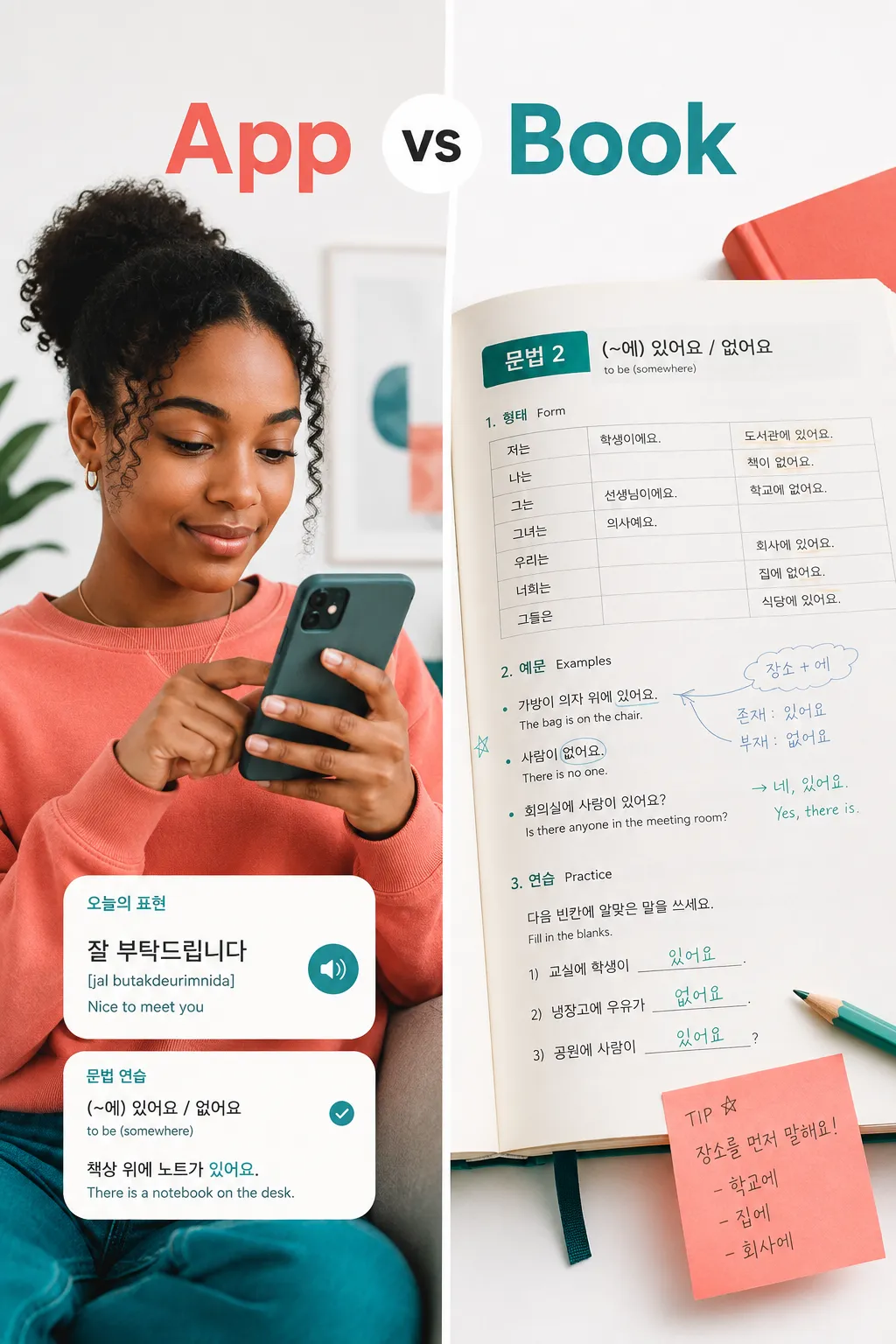
Neither apps nor textbooks alone are enough – combining both gives the best results. Apps like Duolingo or Pimsleur are great for daily vocabulary and listening practice, but they often lack the depth needed for Korean grammar unit explanations. Textbooks like the Yonsei Korean series or TTMIK workbooks fill that gap [4].
Choose apps if you:
- Want short daily lessons that fit into a busy schedule
- Need listening and speaking practice on the go
- Are in the early stages of learning Korean
Choose textbooks if you:
- Want structured grammar explanations with readings and notes
- Are preparing for a test like TOPIK (Test of Proficiency in Korean)
- Prefer working through a full course module by module
For a structured online option, Coursera’s “First Step Korean” course from Yonsei University is one of the most popular beginner programs. It includes graded quiz assignments, lecture videos, lecture notes, and a certificate upon completion [10].
Can You Learn Korean Without a Teacher or Tutor
Yes, you can absolutely learn Korean without a teacher. Thousands of learners reach conversational level through self-study every year using apps, online lessons, YouTube channels, and structured courses [1].
Self-study works best when you:
- Follow a structured course or module plan (not random YouTube videos)
- Take graded quiz assignments to test yourself regularly
- Use spaced repetition flashcard apps like Anki for vocabulary
- Set a consistent daily schedule – even 30 minutes of Korean lessons counts
That said, a tutor or language exchange partner speeds up speaking skills significantly. Platforms like iTalki connect you with native Korean speakers for affordable 1-on-1 lessons.
For a deeper look at structured language learning approaches, check out language-specific lessons from The Fluent Professor.
How to Practice Korean Speaking Without Korean Friends
Speaking practice is possible even with zero Korean friends nearby. The key is creating regular speaking opportunities through technology and community [7].
Practical ways to practice speaking Korean:
- Language exchange apps – HelloTalk and Tandem match you with native Korean speakers who want to learn English
- Online tutors – iTalki and Preply offer affordable 30-60 minutes Korean lessons with native speakers
- Shadow native speakers – Play a Korean audio clip and repeat each sentence immediately after
- Talk to yourself – Narrate your daily routine in Korean out loud (it feels odd but it works)
- Record yourself – Record short 1-2 minutes Korean speaking clips and compare them week by week
Shadowing is especially effective for Korean because it trains both pronunciation and natural speech rhythm at the same time [5].
Is Korean Harder to Learn Than Japanese or Chinese
Korean is generally considered easier than Chinese (Mandarin) for English speakers, and roughly similar in difficulty to Japanese. Chinese requires learning thousands of characters with tonal pronunciation. Korean uses Hangeul, which is phonetic and learnable in days [4].
Compared to Japanese, Korean has a similar grammar structure (Subject-Object-Verb) and both share a lot of vocabulary borrowed from Chinese. However, Korean does not have a complex writing system like Japanese kanji. Most learners find Hangeul easier to master than Japanese hiragana and katakana combined [10].
Quick comparison:
- Chinese: Hard tones + thousands of characters = steepest learning curve
- Japanese: 3 writing systems + complex politeness levels = very challenging
- Korean: Logical alphabet + consistent grammar = hard but learnable for dedicated beginners
What Are the Common Mistakes Beginners Make When Learning Korean
The most common mistake is relying on romanization instead of learning Hangeul properly from the start. Other frequent errors include skipping grammar fundamentals, studying without speaking practice, and trying to learn too much vocabulary without context [2].
Top beginner mistakes to avoid:
- Skipping Hangeul and using romanized text too long
- Memorizing vocabulary lists without using words in sentences
- Ignoring Korean grammar unit structure (especially particles)
- Only using one resource – mix apps, videos, and structured lessons
- Not testing yourself – take a graded quiz or test regularly to find gaps
- Studying in long infrequent sessions instead of short daily ones
If you find you’re making similar mistakes in other languages, our guide on easy Spanish tricks for beginners covers overlapping learning principles that apply across languages.
Best Korean Learning Resources for Self-Study in 2026
The best self-study resources combine structured lessons with real listening content. A mix of a structured course, a vocabulary app, and authentic Korean media covers all the skills you need [4].
Top resources to learn Korean:
- Coursera – First Step Korean (Yonsei University): A free-to-audit course with 6 modules, graded quiz assignments, lecture notes, and a certificate. Covers Hangeul, greetings, family, time and date, and daily life [10]
- Talk To Me In Korean (TTMIK): Free podcast lessons and paid textbooks, great for grammar and vocabulary
- Anki: Spaced repetition flashcard app – ideal for hitting your 10-20 new words per day target
- Pimsleur Korean: Audio-based lessons focused on speaking – good for commute learning
- Migaku: Immersion-based learning platform with Korean content and built-in dictionary [4]
- KoreanClass101: Structured audio and video lessons at multiple levels
- YouTube channels: “Learn Korean with GO! Billy Korean” and “Professor Oh Korean” offer free lessons
For more language learning strategies, explore the full language-specific lessons library at The Fluent Professor.
What Are the 6 Modules in the First Step Korean Course
The First Step Korean course on Coursera from Yonsei University is structured into 6 core modules. Each module contains lecture videos, readings, lecture notes, and a graded quiz to test your progress [10].
Here is what each module covers:
- Module 1 – Introduction: Course overview, learning goals, and an intro to the Korean language and culture
- Module 2 – The Korean Alphabet: Hangeul consonants, vowels, syllable blocks, and pronunciation rules
- Module 3 – Greetings and Introducing: Basic greetings, self-introductions, and polite speech levels
- Module 4 – Family: Vocabulary for family members, possessives, and describing relationships
- Module 5 – Time and Date: Numbers, days of the week, months, and telling time in Korean
- Module 6 – Daily Life: Everyday activities, simple sentences about routines, and wrap-up
Each unit includes about 60-90 minutes of total content per module. After completing all 6 modules and passing the graded assignments, learners earn a shareable certificate [10].

Skills You’ll Gain and Details to Know About Korean Courses
A well-structured Korean course builds four core skills: reading, writing, listening, and speaking. After completing a beginner course like First Step Korean, you’ll be able to read Hangeul, introduce yourself, discuss family and daily life, and understand basic Korean grammar [10].
Skills gained from a beginner Korean course:
- Reading and writing in Hangeul
- Basic Korean grammar (sentence structure, particles, verb conjugation)
- Core vocabulary for greetings, family, numbers, and daily life
- Listening comprehension for simple conversations
- Confidence to speak Korean in basic social situations
Details to know before enrolling:
- Most beginner courses require zero prior Korean knowledge
- Coursera courses can be audited for free; a certificate requires a paid enrollment
- x27 included features on many platforms include downloadable lecture notes, readings, and offline access
- Total time commitment is typically 2-4 hours per week for a beginner module
- A graded quiz at the end of each unit helps track your progress
How to Structure Your Daily Korean Study Routine
A consistent daily routine is more effective than occasional long sessions. The minimum effective dose for steady progress is 30-40 minutes per day, split across different skills [7].
Sample 30-minute daily Korean study plan:
- 0-10 minutes: Review vocabulary flashcards (Anki or similar)
- 10-20 minutes: Watch one lecture or lesson video with notes
- 20-25 minutes: Grammar practice or a graded quiz
- 25-30 minutes: Speaking – shadowing or recording yourself
On weekends, add a 60-90 minutes session where you watch a Korean drama episode or listen to a Korean podcast. This exposes you to natural speech patterns that structured lessons alone can’t teach [6].
For learners who want to compare how this approach works across different languages, the Fluent Professor homepage has resources covering multiple language learning frameworks.
Is It Better to Learn Korean in Korea or Online
For most beginners, learning Korean online is just as effective as learning in Korea – and far more practical. Immersion in Korea accelerates speaking and listening naturally, but only after you have a solid foundation. Moving to Korea with zero Korean knowledge often leads to frustration, not fluency [8].
Learn online if:
- You are a complete beginner building your foundation
- You want structured lessons with graded quiz checkpoints
- You need flexibility around work or school
Consider immersion in Korea if:
- You already have intermediate Korean (around 500-1,000 words)
- You can attend a formal language program like those at Yonsei or Seoul National University
- You have time for full-time language learning
The best approach is to build a strong base online first, then consider a short immersion trip or study program to accelerate your speaking skills [10].
Considering Learning the Korean Language? Here Are Suggestions to Start Today
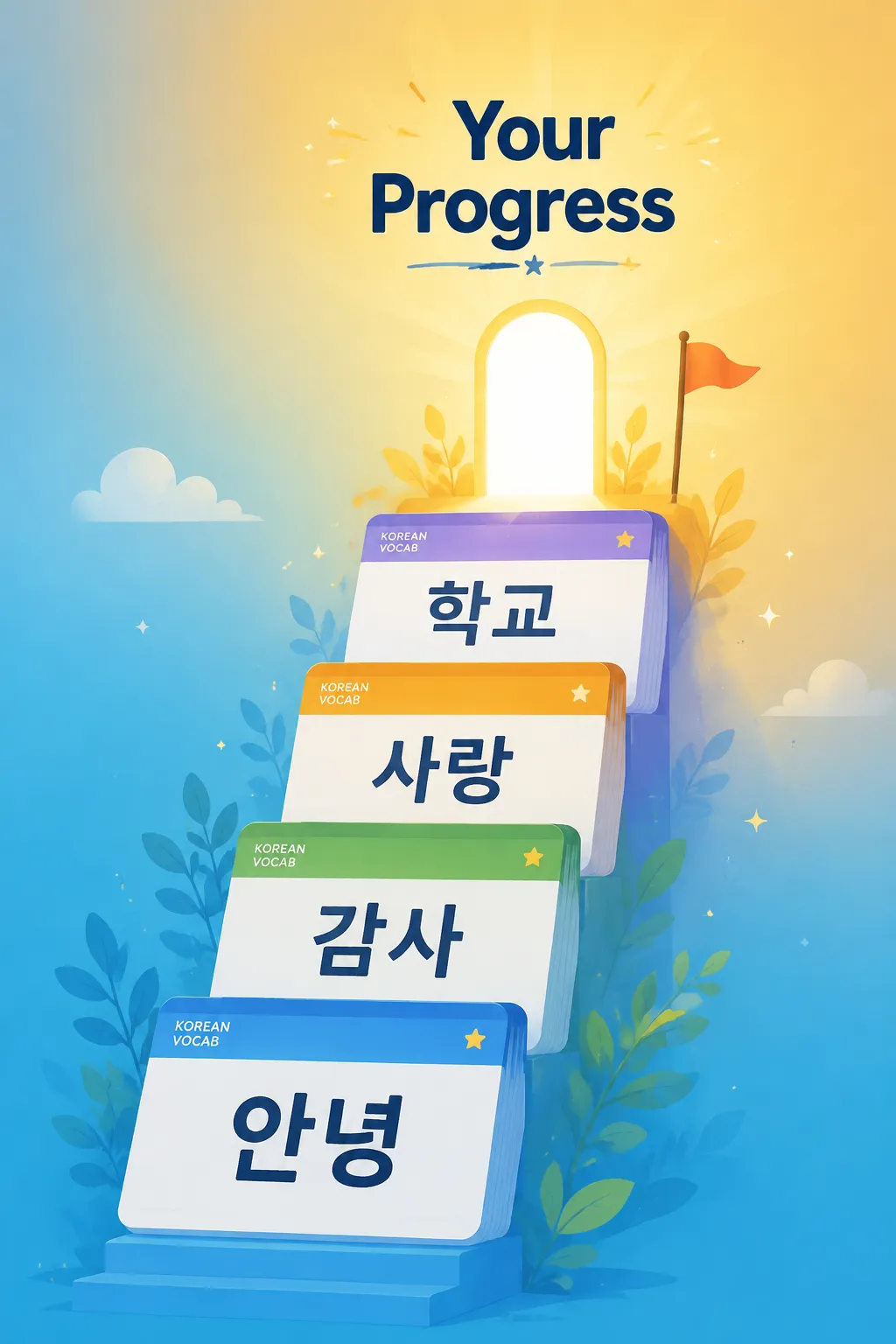
The best time to start learning Korean is right now, with a clear first step. Don’t wait until you have the “perfect” resources or a big block of free time. Even 15 minutes of Hangeul practice today puts you ahead of where you were yesterday [2].
Your action plan for this week:
- Day 1-2: Learn the 14 basic Korean consonants using a free chart or app
- Day 3-4: Learn the 10 basic vowels and practice combining them into syllables
- Day 5-6: Practice reading simple Korean words (아이, 나무, 바나나)
- Day 7: Take a short test or graded quiz to check your Hangeul retention
By the end of week one, you’ll be able to read Korean text out loud – even if you don’t know what it means yet. That first step Korean milestone is genuinely exciting and motivating [1].
Free resources to start today:
- How to learn Korean – Autolingual guide [2]
- Migaku’s practical Korean learning guide for 2026 [4]
- Noun Town Korean fast-learning tips [7]
- Kaiwa’s 2026 beginner guide to Korean [10]
Learner Reviews and Why People Choose Coursera for Korean
Real learner experiences show that structured Korean courses on Coursera consistently deliver results for beginners. Here is what learners say about the First Step Korean course [10]:
Felipe M. said the course gave him a clear structure he couldn’t find in random YouTube videos, and that the graded quiz format kept him accountable each week.
Jennifer J. noted that the lecture notes and readings were detailed enough to review without rewatching every video – a big time-saver.
Larry W. appreciated that the course moved at a pace that let him actually absorb each unit before moving on, unlike app-based learning that pushed him forward too fast.
Chaitanya A. highlighted that earning a certificate after completing the course gave him a concrete goal to work toward, which kept his motivation high through all 6 modules.
These reviews reflect a broader pattern: learners who follow a structured course with graded assignments and clear module progression are more likely to stick with Korean long-term [10].
FAQ: How to Learn Korean Language Step by Step
How do I learn Korean by myself?
Start by learning Hangeul (the Korean alphabet) in your first week using free online resources or apps. Then follow a structured course or textbook to build grammar and vocabulary systematically. Use spaced repetition flashcard apps for daily vocabulary, watch Korean videos for listening practice, and use language exchange apps like HelloTalk to practice speaking. Aim for 30-40 minutes of study per day and test yourself with a graded quiz weekly to track progress.
How do I say “hi” in South Korean?
The most common way to say “hi” in Korean is 안녕하세요 (annyeonghaseyo), which is the polite formal greeting used in most situations. Among close friends or people younger than you, 안녕 (annyeong) is the casual version. In formal or professional settings, 안녕하십니까 (annyeonghasimnikka) is the most respectful form. Learning these greetings is typically the first speaking goal in any beginner Korean lesson.
What are the 100 most common words in Korean?
The 100 most common Korean words include basic pronouns (나/저 – I/me), verbs (하다 – to do, 있다 – to have/exist, 오다 – to come, 가다 – to go), question words (뭐 – what, 어디 – where, 언제 – when), and everyday nouns (사람 – person, 시간 – time, 집 – house, 물 – water). Resources like the TTMIK frequency word list and Anki decks provide ranked vocabulary lists. Mastering these 100 words covers a large portion of everyday Korean conversation.
Can I learn Korean in 7 days?
You cannot become fluent in Korean in 7 days, but you can make meaningful progress. In one week, most dedicated beginners are able to learn the full Hangeul alphabet and read basic Korean text. A focused 7-day plan covers consonants on days 1-2, vowels on days 3-4, syllable blocks on days 5-6, and a reading test on day 7. This is a realistic and motivating first milestone – but full conversational Korean takes 6-12 months of consistent daily study.
Conclusion
Learning Korean language step by step is genuinely achievable for any motivated beginner in 2026. The path is clear: start with Hangeul, build your grammar foundation, grow your vocabulary daily, and practice speaking as soon as possible.
Your next three actions:
- Spend 20 minutes today learning the first 7 Korean consonants using a free chart
- Bookmark one structured course – First Step Korean on Coursera is a great free starting point
- Download a flashcard app and create your first 10-word Korean vocabulary deck
The Korean language opens doors to a rich culture, K-drama, K-pop, business opportunities across Asia, and genuine connections with millions of Korean speakers worldwide. Every 30 minutes you invest in Korean lessons today compounds into real fluency over the coming months.
You’re able to do this – one unit, one lesson, one day at a time.
References
[1] Teach Yourself Korean – https://www.fluentu.com/blog/korean/teach-yourself-korean/
[2] How To Learn Korean – https://autolingual.com/how-to-learn-korean/
[3] Watch – https://www.youtube.com/watch?v=KmPmmFVI2f8
[4] How To Actually Learn Korean In 2026 A Practical Guide – https://migaku.com/blog/korean/how-to-actually-learn-korean-in-2026-a-practical-guide
[5] Watch – https://www.youtube.com/watch?v=NsSUHLa9ixU
[6] Watch – https://www.youtube.com/watch?v=nP3gzv9lWCQ
[7] How To Learn Korean Fast – https://noun.town/blog/how-to-learn-korean-fast/
[8] Learn Korean For Beginners – https://kkoogongnam.com/en/learn-korean-for-beginners/
[9] Watch – https://www.youtube.com/watch?v=YOlwDb0hIKY&vl=en
[10] Learn Korean 2026 Beginners Guide – https://trykaiwa.com/blog/learn-korean-2026-beginners-guide